SEND articles for UK parents
Long-form, plain-language guides, reviewed by qualified UK SEND specialists. Written to be useful at 11pm the night before a school meeting.
 Transitions.Dec 2025
Primary to secondary school transition for SEND children: a 12-month parent plan
Why the work begins in Year 5, what the LA hopes you won't ask for, and the 15 February deadline that decides everything.
Read more13 min read Reviewed by Emma Owen
 Behaviour at home.Dec 2025
After-school restraint collapse: why your child holds it together at school and falls apart at home
It's 3:40pm, the schoolbag is across the hallway, and at parents' evening last week the teacher said your child was a delight. Both are true. Here's what's actually going on.
Read more12 min readReviewed by Emma Owen School attendance.Dec 2025
EBSA (Emotionally Based School Avoidance): a parent's first-month action plan
Tuesday morning. Your child is still in pyjamas at the top of the stairs. The school has already rung twice. Here is the next four weeks as they actually run.
Read more17 min readReviewed by Emma Owen Neurodevelopmental.Dec 2025
AuDHD in primary-age children: how autism and ADHD interact at home and school
Your child hyperfocuses on Lego for three hours and can't sit through ten minutes of maths homework. That contradiction has a name. Here is how the two neurotypes interact, why single-condition advice keeps missing, and what to do next.
Read more12 min readReviewed by Emma Owen Eating & feeding.Dec 2025
ARFID at mealtimes: practical home strategies when your child can't eat
It's 6:40pm, the plate has been pushed away again, and it's the third night this week the meal has ended in tears. What's actually happening, and what to do next.
Read more16 min readReviewed by Emma Owen Diagnosis.Dec 2025
Signs of autism in girls aged 5 to 11: the school-age presentation you might be missing
You are reading this because you have noticed something the teacher has not. The gap between what school sees and what you see is the first piece of evidence, not a sign you are wrong.
Read more11 min readReviewed by Emma Owen Parent wellbeing.Dec 2025
SEND parent burnout: recognising it and what actually helps
The appeal letter has been on the kitchen table for nine days, your mum keeps asking gently whether the school can't just put a TA in, and you can't remember the last time you read a book. This article is for that exhaustion.
Read more12 min readReviewed by Emma Owen Trust & verification.Dec 2025
How Beaakon verifies every specialist: the full methodology
Vetted is a soft word. Here is exactly what Beaakon checks for every specialist, which UK registers we verify against, and what we deliberately don't claim.
Read more18 min readMaintained by the Beaakon team Family life.Dec 2025
Supporting siblings of SEND children: what every parent needs to know
The sibling at the kitchen table, not the SEND child: what your other child means when they say "I'm fine".
Read more11 min readReviewed by Emma Owen Behaviour at home.Dec 2025
The morning meltdown: why it happens and how to stop it derailing the day
It's 7:50am. The cereal isn't eaten, the shoes are missing, your child has locked themselves in the bathroom. Here's what's actually going on.
Read more11 min readReviewed by Emma Owen Behaviour at home.Dec 2025
Homework refusal in a SEND child: when to push, when to back off, when to stop entirely
It's 5:15pm. The reading record is open. Your child is under the table. Three options, the law on your side, and the email to write tonight.
Read more11 min readReviewed by Emma Owen Social life.Jan 2026
Why your SEND child can't cope at birthday parties and what to do about it
The invitation is on the fridge. Last time they ended up under a table. Here's how to decide whether to go, prepare if you do, and the text to the host parent.
Read more9 min readReviewed by Emma Owen Family life.Jan 2026
Christmas with an autistic child: how to keep the wheels on
It's mid-November. The school nativity letter is home, the in-laws have texted, and last year was hard. Here's a plan for the next five weeks.
Read more10 min readReviewed by Emma Owen Public outings.Jan 2026
Supermarket meltdowns: planning, prevention, and what to do mid-aisle
You're in aisle six. Your child is on the floor screaming. A stranger is filming. Here's what to do in the next five minutes.
Read more10 min readReviewed by Emma Owen Healthcare access.Jan 2026
Getting through hairdresser, dentist and GP appointments with a SEND child
The dentist appointment is in eight days. The hair hasn't been cut in seven months. The NHS owes you adjustments you probably haven't used.
Read more11 min readReviewed by Emma Owen Eating & feeding.Jan 2026
The fussy eating spectrum: when it's typical, when it's sensory, and when it's ARFID
Your child eats fewer than 20 foods. The health visitor said it was a phase. The picture you're seeing doesn't match. Here's how to tell which zone you're in.
Read more11 min readReviewed by Emma Owen Behaviour at home.Jan 2026
When your autistic child says "I hate you": what's actually happening and how to respond
Your child has just told you they hate you. Your other child is in the doorway. Three sentences for the next five minutes, and a plan for tomorrow.
Read more10 min readReviewed by Emma Owen Mental health.Jan 2026
Anxiety in autistic children: why it looks different and what actually helps
Around 70% of autistic people meet criteria for at least one psychiatric condition. Anxiety is the most common. Here's how to read what you're seeing.
Read more11 min readReviewed by Emma Owen Neurodevelopmental.Jan 2026
ADHD and emotional regulation: when your child can't calm down
Your child is upside down on the sofa shouting that life is unfair. Welcome to the ADHD storm. Here's what's happening and what to do.
Read more11 min readReviewed by Emma Owen Conditions.Jan 2026
Selective mutism: a parent's guide when your child can't speak in certain places
She talks at home, loud and funny. She has not spoken at school for two years. The GP said she'd grow out of it. She hasn't. Here's the path out.
Read more11 min readReviewed by Emma Owen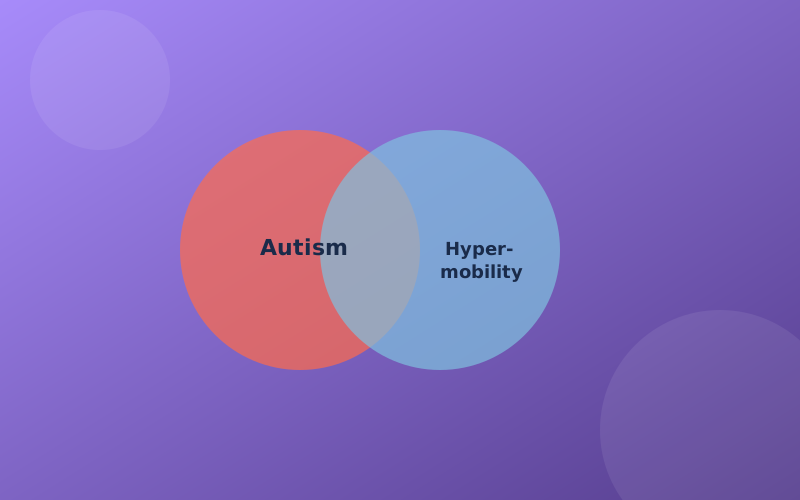 Conditions.Jan 2026
Hypermobility and autism: the overlap most parents miss
Clumsy, lazy at handwriting, slumps at the table, growing pains. Four readings, all incomplete. The overlap between autism and hypermobility is one of UK paediatrics' biggest unflagged stories.
Read more12 min readReviewed by Emma Owen Conditions.Feb 2026
Tourette's syndrome in children: a parent's first-year guide
Blinking, neck jerk, throat-clearing. The school SENDCO has asked. The paediatric appointment is months away. Here's the first year, in plain English.
Read more11 min readReviewed by Emma Owen Mental health.Feb 2026
OCD in primary-age children: spotting it and what to do
Forty reassurance questions a day. The lamp on for a count of three. A bad thought that won't stop. The GP said 'a worrier.' What you may actually be looking at has a name.
Read more12 min readReviewed by Emma Owen Conditions.Feb 2026
PANS and PANDAS: when your child's behaviour changes suddenly
Three weeks ago she was fine. A sore throat, then a fortnight later you don't recognise her. PANS/PANDAS is real, contested, and there's a specific path through.
Read more12 min readReviewed by Emma Owen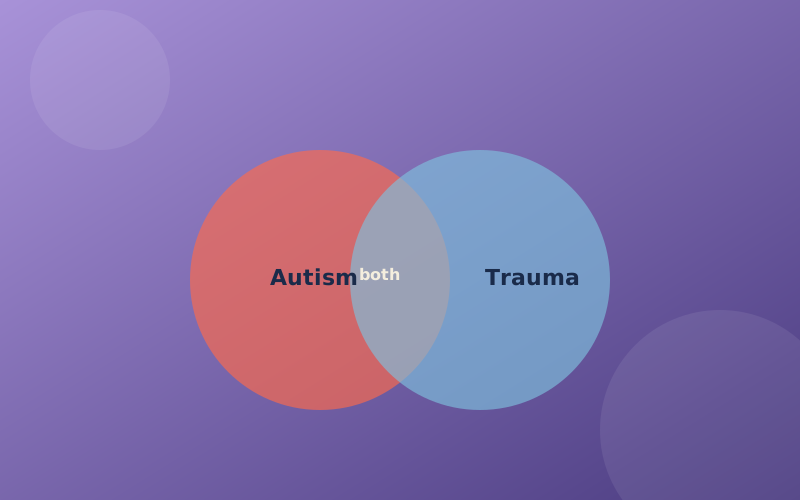 Conditions.Feb 2026
The autism and trauma overlap: when behaviour gets misread
Post-adoption support says trauma. The school SENDCO says autism. CAMHS has a waiting list. You're looking at one child and two professional camps that don't talk.
Read more12 min readReviewed by Emma Owen EHCP.Feb 2026
Your EHCP has been refused: a step-by-step plan for what happens next
The refusal letter arrived yesterday. You read it twice and put it on the side. Here's exactly what to do next, in order, with the dates you cannot miss.
Read more13 min readReviewed by Emma Owen EHCP.Feb 2026
Section F and Section B of an EHCP: why these two parts matter most
Section B is needs. Section F is provision. Every need needs a match. Here's the audit that turns a vague plan into one you can actually enforce.
Read more12 min readReviewed by Emma Owen EHCP.Feb 2026
Preparing for your child's Annual Review: a SENDCO's parent guide
Last year you nodded a lot and the plan was 'maintained' with no changes. Eighteen months on, the plan bears little resemblance to reality. This year, do this.
Read more12 min readReviewed by Emma Owen EHCP.Feb 2026
Naming a school on an EHCP: how it actually works and what to ask for
The LA officer said 'a request, not a right.' Technically true, substantively wrong. Here's what section 39 actually gives you, and how to use it.
Read more12 min readReviewed by Emma Owen EHCP.Feb 2026
Independent specialist schools: how parents successfully get them funded
You visited the school and knew. Then the LA said £65,000 a year, no. The route to a publicly-funded independent specialist place is specific, evidenced, and well-trodden. Here is the path.
Read more12 min readReviewed by Emma Owen EHCP.Mar 2026
Reduced timetables: when they're lawful and when they aren't
The 'couple of weeks' has become six months. Most reduced timetables that drift like this are technically unlawful and quietly normalised. Here is what the rules actually say.
Read more12 min readReviewed by Emma Owen EHCP.Mar 2026
Off-rolling: what it is and how to recognise if it's happening to your child
The deputy head suggested home education. The atmosphere was kind. It didn't feel like a threat. Three weeks later your child is off the roll. This is off-rolling, not a kindness.
Read more12 min readReviewed by Emma Owen EHCP.Mar 2026
Section 19 of the Education Act: the LA duty most parents don't know about
Your child has been out of school for six weeks. The LA says they're not involved. Underneath this is a duty that has already started. When you cite it, the conversation changes.
Read more12 min readReviewed by Emma Owen EHCP.Mar 2026
Direct Payments and personal budgets: how to actually use them
A friend mentioned Direct Payments. The SENDIASS adviser nodded. The LA officer said something about a Personal Budget and you didn't quite follow. This is one of the most under-claimed entitlements in UK SEND.
Read more12 min readReviewed by Emma Owen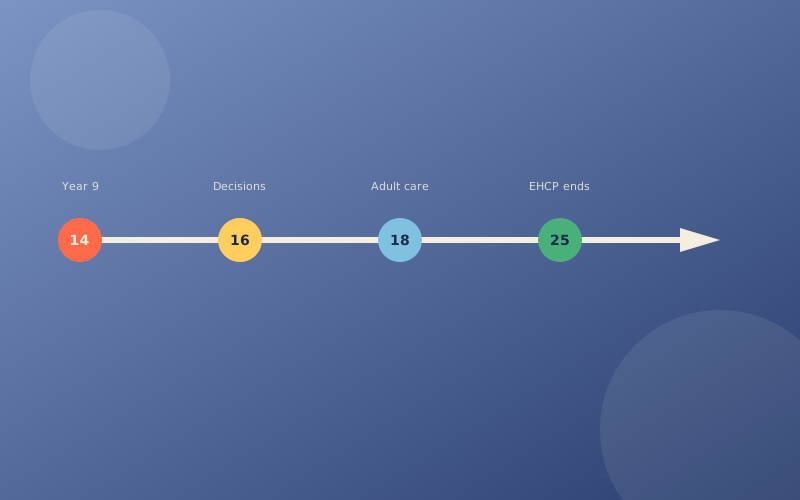 Transitions.Mar 2026
The 16 to 25 transition: keeping support in place as your SEND child becomes an adult
Your young person is 15. A friend mentioned the 16-25 cliff and the LA's habit of trying to end EHCPs at 18. Here is the shape of the next decade.
Read more13 min readReviewed by Emma Owen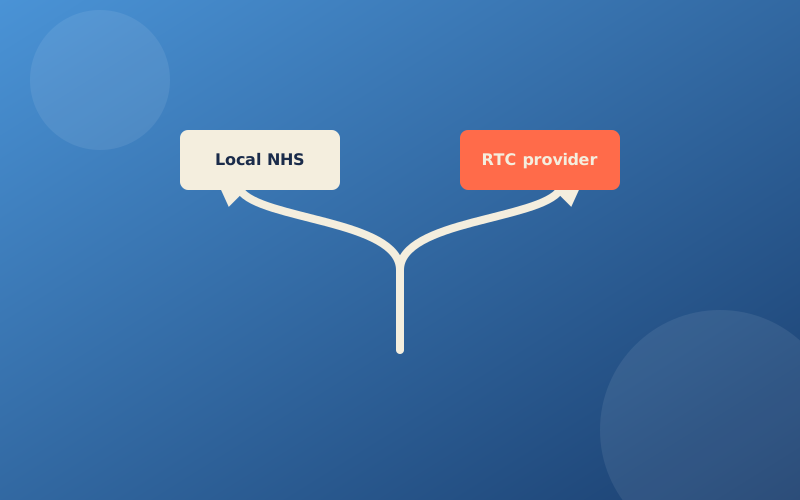 Diagnosis.Mar 2026
Right to Choose for autism and ADHD assessment: how it actually works
The local autism wait was three years. A friend mentioned Right to Choose. The GP looked surprised. Some pages call it private. It isn't. Here's the practical 2026 version.
Read more12 min readReviewed by Emma Owen Diagnosis.Mar 2026
Telling your child about their autism or ADHD diagnosis
The letter arrived three weeks ago. You haven't yet told the person it actually applies to. Now they're sitting across from you eating cornflakes and you don't know where to start.
Read more12 min readReviewed by Emma Owen Diagnosis.Mar 2026
When school disagrees with your child's diagnosis
The SENDCO read the diagnostic letter and said, carefully, they were 'a bit surprised, to be honest.' Here's what's probably actually happening, and what to do about it.
Read more12 min readReviewed by Emma Owen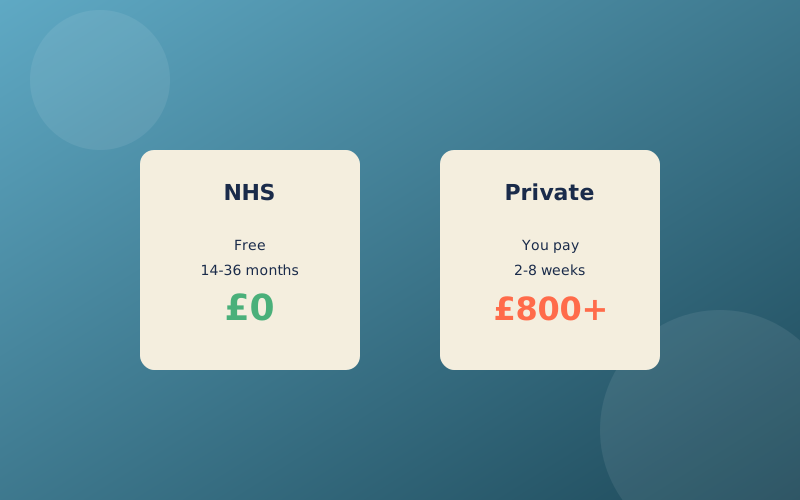 Diagnosis.Mar 2026
Private vs NHS autism assessment: what changes, what doesn't
The GP referred your child in February. The NHS wait is 22 months. A private clinic is £1,650 and known. Right to Choose came up in a Facebook group. Here is the honest comparison.
Read more13 min readReviewed by Emma Owen Behaviour at home.Mar 2026
Aggression toward parents and siblings: when your child hurts the people closest to them
You have a bruise on your forearm under your sleeve. Last week your daughter got pushed against the wall. You have not yet told your mother. You are not alone, you are not failing, and there is a route through.
Read more13 min readReviewed by Emma Owen Behaviour at home.Mar 2026
Self-injurious behaviour in autistic children: a parent's first-response guide
Your three-year-old has started banging her head against the wall when she's upset. You've read the worst-case versions and not slept. Here is what it actually is, and the UK route to specialist help that works.
Read more12 min readReviewed by Emma Owen Specific behaviours.Apr 2026
Toilet training when your child has SEND: why the usual advice fails
Your four-year-old is starting school in September and still in nappies. The three-day method failed twice. Toilet training a SEND child is a different mechanical problem. Here is what UK clinical guidance actually says.
Read more13 min readReviewed by Emma Owen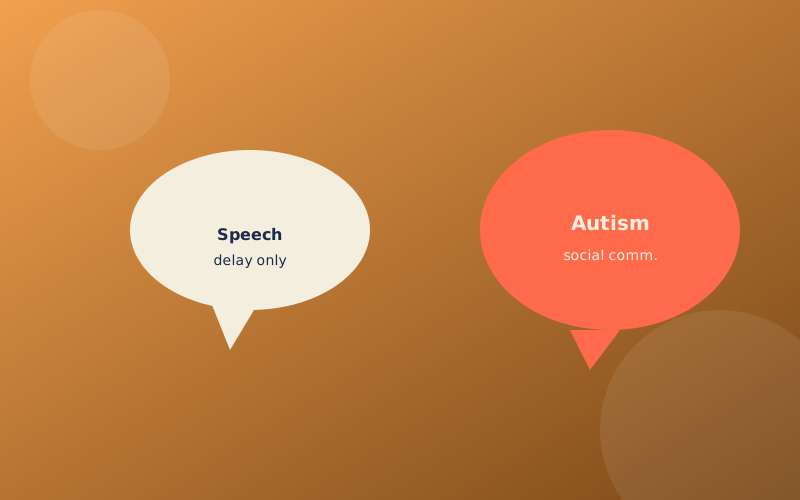 Diagnosis.Apr 2026
Speech delay vs autism: the differences a parent can spot
He has six words at 2½. He doesn't point. He doesn't look up when you call his name. The Internet has not helped. Here is the difference between speech delay and autism in plain UK terms.
Read more13 min readReviewed by Emma Owen Parent wellbeing.Apr 2026
SEND parenting and your relationship: what couples struggle with and what helps
You can't remember the last time you and your partner had a conversation that wasn't about your child. You love each other. You are also slowly becoming flatmates. Here is what the research says and what actually helps.
Read more12 min readReviewed by Emma Owen Parent wellbeing.Apr 2026
Working full time with a SEND child: making it sustainable
You logged off the team meeting at 12:45 for the paediatric appointment. The annual review is next month at 10am. The legal version is you have more rights than most working parents are told. Both matter.
Read more13 min readReviewed by Emma Owen Family life.Apr 2026
Telling grandparents and extended family about your child's diagnosis
Your mum is coming for Sunday lunch on the 12th. She doesn't yet know. Your father-in-law will mention his neighbour's son who grew out of it. The fear of these conversations can be larger than the diagnosis itself.
Read more12 min readReviewed by Emma Owen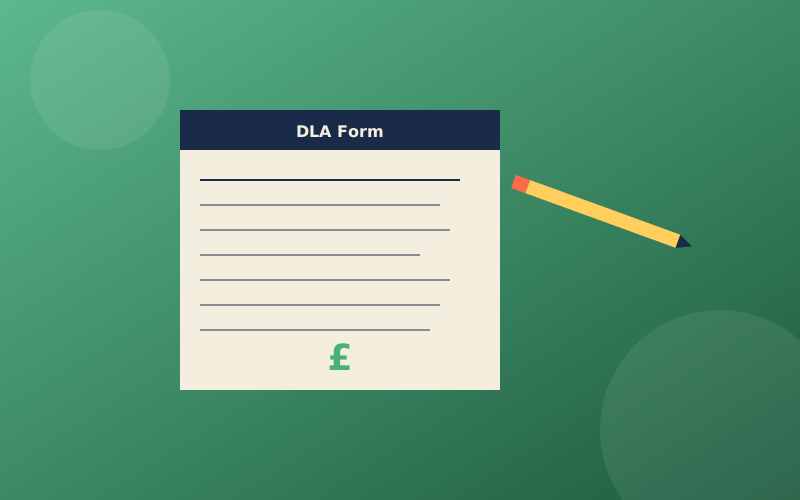 Benefits & finance.Apr 2026
DLA for children: how to write the form so you get the right rate
The form is 42 pages. The boxes are small. You're probably doing it wrong in a specific, fixable way. Here is the form done right, with the techniques used by experienced welfare advisers.
Read more14 min readReviewed by Emma Owen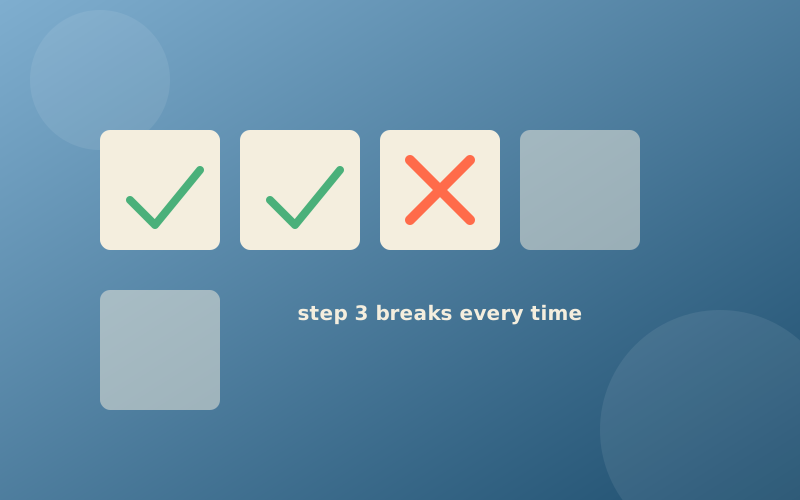 Strategy.Apr 2026
When visual schedules stop working (or never did): troubleshooting for SEND parents
You laminated. You printed velcro dots. It worked for six weeks. Now it's ignored. The Internet says be patient and try harder. The Internet is wrong. There is a specific reason and a specific fix.
Read more13 min readReviewed by Emma Owen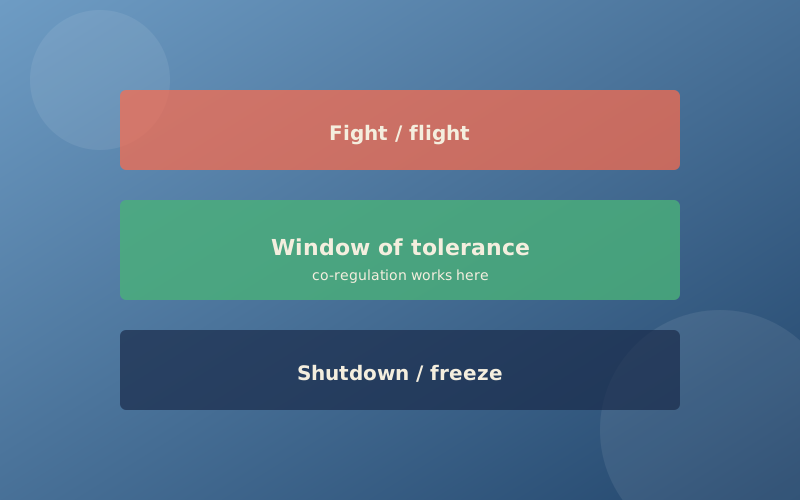 Strategy.Apr 2026
Co-regulation explained: helping your child without taking on their dysregulation
The SENDCO used the word. The paediatrician used it twice. Everyone assumes you know what it means. You don't, not really. Here is what co-regulation actually is, and how to do it without taking on their storm.
Read more13 min readReviewed by Emma Owen
Want a specialist on a real situation, not a general article?
A Beaakon SEND specialist will read your paperwork and give you specific, kitchen-table advice in a 45-minute video call. £45.
Find a specialist